The Entryway Drop Zone: One Wall, Zero Pile
Published August 2026 · 6 min read
Every home has The Spot. It's the counter corner or console table nearest the front door, and it collects: mail, keys, sunglasses, a leash, receipts, the package you need to return, more mail. You clear it on Saturday. By Tuesday it's back, because the stuff isn't the problem. The missing system is.
A drop zone is that system: one small piece of wall by the door where everything you carry in has an assigned landing spot. You don't need a mudroom, a built-in, or a renovation. You need a few feet of wall and about twenty minutes with a drill (or renter-friendly hooks, more on that below). Here's the version that actually holds.
The Anchor: Mail Slot + Key Hooks in One
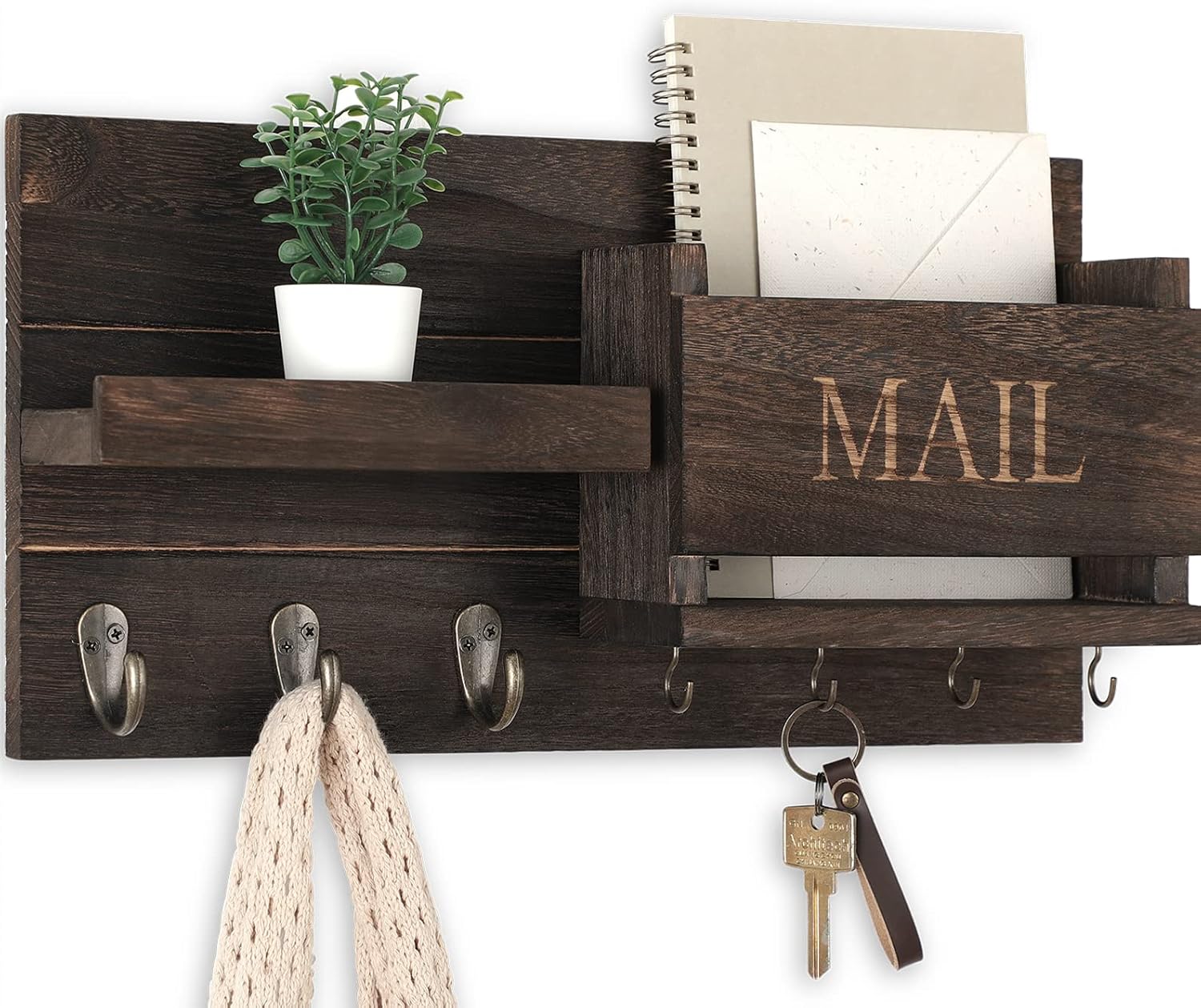
The core of the drop zone is a single wall-mounted piece that handles the two worst offenders, paper and keys, in one move. Our pick is the Lwenki, a dark-stained wood organizer with a mail slot, a small shelf, and two rows of hooks: mail goes in the slot, sunglasses and wallet go on the shelf, keys go on the four small hooks, and leashes and coats go on the three bigger ones. It comes with anchors and mounting hardware, and the stained wood reads as decor rather than storage, which matters for the one piece of organization guests will actually see.
The trick that makes it work: the slot is for in-transit paper only. Mail lands there, gets sorted once a week, and either leaves the house or gets filed. The moment the slot becomes long-term storage, you've just elevated the pile three feet off the counter.
Check Price on AmazonThe Floor: Shoes Without the Shoe Mountain
Shoes are the second entryway battle, and open floor is a losing strategy. Clear drop-front shoe boxes stack into a neat column that works in an entry closet or right against the wall: current-season pairs at eye level, the rest higher up. The drop-front matters because you can pull one pair without unstacking the tower, which is the difference between a system that gets used and a system that gets ignored.
The Door Itself: Free Real Estate
If your entry has a closet, the back of its door is the most underused storage in the house. An over-the-door organizer with clear pockets swallows the small stuff that otherwise breeds on surfaces: gloves, dog bags, sunscreen, the stamps you can never find. Clear pockets mean zero digging, and the whole thing installs by hanging it over the door, no tools at all.
Renter-Friendly Notes
No drilling allowed? The wall organizer is the one piece here that mounts with screws and anchors, so it is the one to clear with your landlord or swap for adhesive key hooks and a small tray. Everything else, the shoe boxes and the door organizer, touches nothing permanent.
Frequently Asked Questions
- What goes in an entryway drop zone?
- Only things that enter and leave the house with you: keys, mail, sunglasses, leashes, outgoing packages, and everyday shoes. Anything that lives in the house long-term should have a home deeper in the house, or the drop zone becomes a storage unit.
- How do I keep mail from piling up by the front door?
- Give mail a single landing slot and a weekly sort ritual. The slot catches everything as you walk in; once a week, everything in it gets recycled, actioned, or filed. Its job is triage, not storage.
- How do I make a drop zone without a mudroom?
- A wall-mounted mail organizer with key hooks, a stack of clear shoe boxes, and an over-the-door organizer create a complete drop zone in a few square feet. The shoe boxes and the door organizer need no drilling at all.
- Where should a drop zone go?
- Within arm's reach of the door you actually use, which for many homes is the garage or side door rather than the front door. The system only works if using it takes zero extra steps.
One Wall, Done
A slot for the paper, hooks for the keys, a tower for the shoes, a door for the small stuff. That's the whole system, and it fits in the few feet you already have. The rest of our favorite home organization picks are here, and if the kitchen counter is your other pile spot, start with the kitchen organizers guide.